
Family Law Attorney
Montgomery, Texas
We represent families throughout Montgomery in divorce, high-asset divorce, child custody, child support, property division, and all family law matters. One of Texas's oldest cities — and every case is heard in Conroe at the Montgomery County courts where we appear regularly.
Experienced Family Law Representation for Montgomery Families — Including High-Asset & Complex Divorce

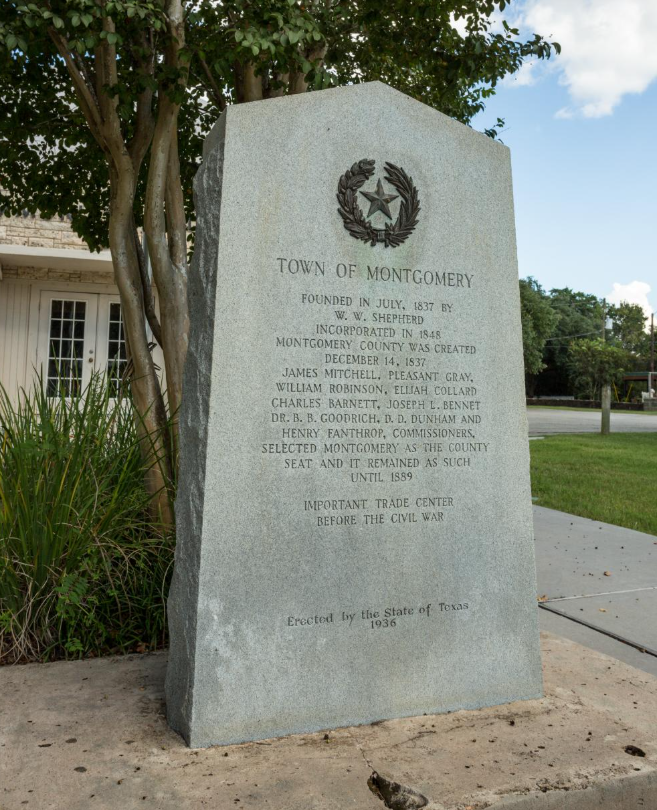
Montgomery, Texas is one of the oldest cities in the state — founded in July 1837 by W.W. Shepherd, incorporated in 1848, and the original seat of Montgomery County until 1889. That deep history is matched today by a community of landowners, ranchers, Lake Conroe waterfront property owners, and families with significant ties to the land and the local economy. When a marriage ends here, the marital estate often reflects that character — rural acreage, lake property, business interests, livestock, equipment, and retirement accounts built over decades of hard work.
All Montgomery family law cases are heard in Conroe at the Montgomery County courthouse — in the 418th, 410th, or County Court at Law No. 3. Our office is in downtown Conroe, steps from those courts. We appear in them regularly and know the local rules, procedures, and expectations of each.
We represent Montgomery families in divorce, child custody, child support, property division, and prenuptial agreements. Free consultations available. Also serving nearby Magnolia, TX →
- High-asset & complex divorce
- Contested & uncontested divorce
- Child custody & conservatorship
- Child support — establishment & modification
- Division of marital property
- 401(k), 403(b), IRA & pension division
- Business valuation & division
- Spousal maintenance
- Prenuptial agreements
- Adoption
Also serving Magnolia, TX — Montgomery and Magnolia are neighboring communities in western Montgomery County, both served by the same three Conroe courts. If you are in the Magnolia area, see our dedicated Magnolia page for community-specific information.
Magnolia, TX Page →Montgomery Family Law Cases Are Decided in Conroe
All Montgomery divorce and family law cases are filed and heard at the Montgomery County courthouse in Conroe. Our office is steps from that courthouse — and we appear regularly in all three courts that handle Montgomery cases.
What Happens to Your Assets in a Texas Divorce
Montgomery-area marital estates often reflect the character of the community — rural land, lake property, livestock, business interests, and retirement accounts. Here is how Texas law approaches each.
Retirement accounts accumulated during the marriage are generally community property in Texas — but they cannot simply be split at the bank. Dividing a 401(k), 403(b), or pension requires a Qualified Domestic Relations Order (QDRO) — a separate court order sent directly to the plan administrator. Without a QDRO, the plan cannot legally divide the account. IRAs require a different process. Early withdrawal triggers taxes and a 10% penalty.
Montgomery-area divorces frequently involve rural acreage, ranches, timberland, and agricultural operations. Land purchased during the marriage with community funds is community property, subject to just and right division. Separate property claims — including pre-marital land or inherited acreage — require proof. Livestock, equipment, and agricultural leases add additional complexity.
Lake Conroe waterfront property, primary residences, investment properties, and vacation homes purchased during the marriage are community property subject to division. Waterfront property values have appreciated significantly in recent years, making accurate valuation and strategic division essential. We account for all real property in the marital estate.
If a business formed or grew during the marriage, it may be partially or fully community property. Texas courts rarely force a sale — instead awarding the business to one spouse with other marital assets used to equalize the division. Business valuation and characterization of separate versus community interest are the key battlegrounds.
Vehicles — including trucks, trailers, ATVs, boats, and heavy equipment — are marital assets when purchased with community funds. In rural Montgomery-area estates, equipment and vehicles often represent significant value that is overlooked in settlement negotiations. We account for all tangible assets in the marital estate.
For Montgomery residents entering a marriage with inherited land, a family ranch, a business interest, or significant separate property, a prenuptial agreement is one of the most practical planning tools available. A properly drafted Texas prenuptial agreement defines what remains separate property, limits spousal maintenance claims, and protects generational assets.
"Can I Get Half of My Spouse's Retirement Account in a Texas Divorce?"
Yes — in most cases. Retirement accounts accumulated during the marriage are community property in Texas and subject to division. But the process is more complicated than dividing a bank account, and getting it wrong has real financial consequences.
For 401(k)s, 403(b)s, and pensions, a separate court order called a Qualified Domestic Relations Order — a QDRO — is required. The QDRO is sent directly to the retirement plan administrator and instructs them how to divide the account. Without a QDRO, the plan administrator cannot legally divide the account between spouses. Attempting to access funds through early withdrawal instead triggers income taxes and a 10% early withdrawal penalty.
IRAs are different — they are divided through a process called a transfer incident to divorce, which has its own requirements with the IRA custodian. Handling these correctly requires attention to both the divorce decree language and the custodian's specific procedures.
We make sure your share of every retirement account is properly identified, documented, and protected — so that what is awarded on paper actually reaches you.
- 401(k) — requires a QDRO; divided per court order to plan administrator
- 403(b) — requires a QDRO; same process as 401(k)
- Pension — requires a QDRO; language must match plan requirements
- IRA — transfer incident to divorce; no QDRO but specific steps required
- Deferred comp — treatment varies; must be addressed in decree language
- Early withdrawal — triggers taxes and 10% penalty; never the right approach
- Missing a QDRO — cannot be corrected after final decree without additional proceedings
Divorce, Child Custody & Child Support in Montgomery, TX
Texas requires a mandatory 60-day waiting period from filing. Uncontested divorces often close shortly after. High-asset and contested divorces — particularly those involving rural land, lake property, agricultural operations, business interests, and retirement accounts — typically take six months to over a year.
- High-asset & complex divorce
- Contested & uncontested divorce
- Temporary orders & injunctions
- Mediation representation
- Post-divorce modifications
Child custody cases for Montgomery families are heard in Conroe at the Montgomery County courts. Texas applies the best interest of the child standard — evaluating each parent's involvement, home stability, and the child's existing relationships. Montgomery ISD boundaries and rural living arrangements are often meaningful factors in local custody cases.
- Joint & sole managing conservatorship
- Possession schedules & geographic restrictions
- Custody modifications
- Emergency custody orders
- Parental alienation matters
Texas child support is calculated using statutory guideline percentages of the paying parent's net monthly resources. Courts may order above-guideline support when the child's proven needs exceed what the guidelines provide. Support can be established as part of a divorce or SAPCR, modified when circumstances change, and enforced through contempt when a parent fails to pay.
- Child support establishment
- Above-guideline support arguments
- Modification petitions
- Enforcement & contempt proceedings
- Medical support obligations
Standard vs. Expanded Possession Order — What Noncustodial Parents Need to Know
Texas law gives the noncustodial parent two possession schedule options. Most orders default to the Standard Possession Order — but the Expanded SPO gives significantly more time and must be affirmatively elected in writing. This is one of the most frequently missed details in Texas custody cases.
The default possession schedule when parents live within 100 miles of each other. Transfers occur at 6:00 PM on the first day of possession.
- 1st, 3rd, and 5th weekends — Friday 6:00 PM to Sunday 6:00 PM
- Thursday evenings during the school year — 6:00 PM to 8:00 PM
- Alternating holidays including Thanksgiving, Christmas, spring break
- 30 days of summer possession
- Father's Day / Mother's Day weekends
The Expanded SPO gives the noncustodial parent significantly more time — transfers begin at school dismissal, not 6:00 PM. Must be elected in writing.
- Weekend possession begins at school dismissal Friday — not 6:00 PM
- Weekend possession ends when school resumes Monday morning
- Thursday possession begins at school dismissal — ends at school resumption Friday
- Summer possession may extend to 42 days
- Must be elected in writing at or within 30 days of the final order
The Expanded SPO does not apply automatically. Under TFC §153.3171, the noncustodial parent must make a written election at the time of the final order or within 30 days of the order being signed. Missing this window means defaulting to the Standard SPO — and additional court proceedings are required to change it.
- Election must be in writing
- Must be made at or within 30 days of the final order
- Applies prospectively — not retroactively
- Should be addressed in mediation or at final trial
When parents live more than 100 miles apart, a different possession schedule applies. The noncustodial parent receives:
- One weekend per month of their choice with 14 days notice
- Spring break in alternating years
- Extended summer possession — up to 42 days
- Alternating holidays
- Thursday evening visits are not included
How Much Will I Pay — or Receive — in Child Support in Texas?
TFC §154.125 & §154.062Texas child support is calculated using statutory guideline percentages of the paying parent's monthly net resources under Texas Family Code §154.125. Net resources are defined under TFC §154.062 and include wages, salary, commissions, overtime, self-employment income, rental income, and other sources — after deductions for Social Security taxes, federal income tax, union dues, and the cost of health insurance for the child.
The guidelines apply to the first $9,200 in monthly net resources. Above that threshold, courts may order additional support based on the child's proven needs. Courts can also deviate from guidelines when the paying parent supports children in multiple households, when the child has special needs, or when other circumstances justify deviation.
Child support does not end automatically. In Texas, support obligations generally continue until the child turns 18 or graduates from high school — whichever is later. A child with a physical or mental disability may be entitled to ongoing support beyond age 18 under TFC §154.302.
If your income changes significantly, you must file a petition to modify — simply stopping or reducing payments without a court order is a violation subject to enforcement, contempt, and accumulated arrearages with interest.

Montgomery Family Law — What Sets Us Apart
Our office is in Conroe — the same courthouse where your case is filed and decided. We appear regularly in the 418th, 410th, and CCL3. That familiarity is a daily reality of our practice — not a marketing claim.
Ranches, acreage, Lake Conroe waterfront property, livestock, equipment, and agricultural operations — Montgomery-area estates require an attorney who understands how Texas law treats these assets and how to value and divide them correctly.
From the Standard Possession Order to the Expanded SPO election, Montgomery ISD enrollment considerations, geographic restrictions, and modification petitions — we build custody strategies around your child's actual life and your parental rights.
Family law is not a sideline for us. It is what we do — which means focused expertise, not a generalist trying to manage a divorce alongside real estate closings and business filings.
Litigation is sometimes necessary — but rarely the most efficient path. We give you a candid assessment of your options, likely outcomes, and costs before you commit to a strategy. No false promises.
Flat-fee uncontested divorce through our uncontested divorce service for qualifying cases. Transparent hourly billing for contested matters. Free consultation before you commit.
Not every Montgomery divorce is contested. If you and your spouse have reached full agreement on property, children, and support, you may qualify for our flat-fee, attorney-guided divorce service through our uncontested divorce service. A licensed attorney handles every step from filing through final decree at a predictable flat fee. Qualifying agreed custody modifications may also be handled through this service. Free consultation to determine eligibility.
Speak With a Family Law Attorney Serving Montgomery, TX
Our office is in Conroe — minutes from Montgomery and steps from the Montgomery County courthouse where your case will be decided. Free consultations available for all family law matters.
(936) 298-8000Family Law FAQ — Montgomery, Texas
Courts & Venue for Montgomery, TX
Where Montgomery cases are filed and decided — and why local court knowledge matters.
Montgomery is located in Montgomery County, Texas. All divorce and family law cases are filed and heard at the Montgomery County courthouse in Conroe — in the 418th Judicial District Court, the 410th Judicial District Court, or County Court at Law No. 3, depending on case assignment. Our firm appears regularly in all three courts.
Yes — each court has its own local procedures, scheduling preferences, and approach to case management. Knowing those distinctions helps set realistic expectations, prepare the right materials, and avoid procedural issues that delay resolution. It is one of the concrete advantages of working with a firm that appears in these courts regularly rather than one that handles Montgomery County cases only occasionally.
Divorce in Montgomery, TX
How Texas divorce works and what to expect in Montgomery County courts.
Texas requires a mandatory 60-day waiting period from the date of filing. From there, timeline depends on whether the case is contested:
- Uncontested (no children): 60–90 days after filing
- Uncontested (with children): 60–120 days
- Contested — moderate complexity: 6–12 months
- High-asset or highly contested: 12 months to 2+ years
High-asset divorces in Montgomery involving rural land, agricultural operations, lake property, or business valuation typically take longer due to the discovery required to fully identify and value the marital estate.
Yes. Property acquired during the marriage is generally community property in Texas, subject to division in a just and right manner — not automatically 50/50. Courts consider each spouse's earning capacity, the children's needs, fault in the breakup, and other factors.
Separate property — owned before marriage, received as a gift, or inherited — is not subject to division. The claiming spouse bears the full burden of proof. In Montgomery, this often arises with inherited land or family ranches that have been in one family for generations. Community contributions to separate property can create reimbursement claims.
Retirement Accounts & QDROs
How 401(k)s, 403(b)s, pensions, and IRAs are divided — and why most people have never heard of a QDRO until they need one.
Yes — the portion accumulated during the marriage is generally community property. But dividing it requires a Qualified Domestic Relations Order (QDRO) — a separate court order sent to the plan administrator. Without one, the administrator cannot legally divide the account.
- 401(k) and 403(b): Require a QDRO
- Pensions: Require a QDRO with plan-specific language
- IRAs: Divided through a transfer incident to divorce — no QDRO required but specific steps apply
- Early withdrawal: Triggers income taxes and a 10% federal penalty — never the right approach
Missing a QDRO after the final decree requires additional court proceedings to fix and can result in losing your share entirely.
Property Division in Montgomery, TX
How Texas divides rural land, lake property, agricultural assets, and other complex property in a Montgomery divorce.
Real property purchased during the marriage with community funds is community property, subject to just and right division. In Montgomery, this frequently includes rural acreage, ranches, Lake Conroe waterfront property, and investment land. Common outcomes include:
- One spouse buys out the other's equity and keeps the property
- The property is sold and net proceeds divided
- A deferred sale — typically while children remain in school
If one spouse owned the property before marriage, received it as a gift, or inherited it, it may be separate property — but that spouse must prove it. Community contributions to the mortgage or improvements on separate property can create reimbursement claims that complicate what initially appears straightforward.
Agricultural operations present some of the most complex property division issues in Texas family law. Key questions include:
- Characterization: Was the ranch separate property (pre-marital, inherited, or gifted) or community property — or a mix?
- Valuation: What is the operation worth, including land, improvements, livestock, equipment, and leases?
- Division: Texas courts rarely force a sale of an operating ranch. The operation is typically awarded to one spouse with equivalent marital assets used to offset the other spouse's share.
Community contributions — labor, income, mortgage payments, improvements — to a separate-property ranch can create reimbursement claims even when the land itself is separate property.
Child Custody in Montgomery, TX
How Montgomery County courts decide custody for Montgomery families.
Montgomery County family courts apply the best interest of the child standard under TFC §153.002. Courts evaluate:
- Each parent's day-to-day involvement in the child's life
- Stability and quality of each home environment
- The child's existing relationships with siblings and family
- Each parent's physical and mental health
- Any history of family violence, substance abuse, or neglect
- Each parent's willingness to support the child's relationship with the other parent
- For children 12 and older — the child's expressed preference
Texas law is gender-neutral. Fathers and mothers are evaluated equally.
Montgomery County courts commonly restrict the child's primary residence to Montgomery County and contiguous counties — Harris, Walker, San Jacinto, Waller, and Grimes. This prevents the primary parent from relocating the child outside that area without a court modification order or the other parent's written consent. Violating a geographic restriction is grounds for an enforcement action and can support a modification petition.
Possession Schedule — SPO vs. Expanded SPO
The difference between the Standard and Expanded Possession Order — and why the election timing matters.
The Expanded Standard Possession Order (ESPO) under TFC §153.317 gives the noncustodial parent significantly more time than the standard schedule:
- Standard SPO: Weekend possession begins Friday at 6:00 PM
- Expanded SPO: Weekend possession begins at school dismissal Friday — ends when school resumes Monday morning
- Thursday possession begins at school dismissal and ends at school resumption Friday morning
- Summer possession may extend to 42 days
The Expanded SPO must be elected in writing at or within 30 days of the final order under TFC §153.3171. It does not apply automatically — missing that window means defaulting to the Standard SPO.
Child Support in Texas
How the guidelines work, when courts deviate, and what happens when circumstances change.
Texas child support is calculated under TFC §154.125 using guideline percentages of the paying parent's monthly net resources:
- 1 child — 20% of net monthly resources
- 2 children — 25%
- 3 children — 30%
- 4 children — 35%
- 5 or more children — 40%
Net resources are defined under TFC §154.062. Guidelines apply to the first $9,200 in monthly net resources. Courts may deviate when circumstances justify it — including above-guideline support when the child's proven needs exceed what the guidelines provide.
Child support in Texas typically ends when the child turns 18 or graduates from high school — whichever occurs later. If the child has a physical or mental disability, the obligation may continue beyond age 18 under TFC §154.302. Support does not end automatically — the paying parent may need to formally terminate the obligation through the court to stop wage withholding.
Self-employment income — including income from ranches, agricultural operations, and small businesses — is included in net resources under TFC §154.062. However, calculating net resources for a self-employed parent is more complex than for a salaried employee. Business expenses, depreciation, and owner distributions all affect the calculation. Courts scrutinize self-employment income carefully, and both parties may present evidence on the proper calculation. If you or your spouse has self-employment income, accurate documentation of income and expenses is critical from the start.

Family Law
Family Law Overview Divorce Uncontested Divorce Child Custody Child Support Property Division Spousal Maintenance Prenuptial Agreements Grandparents' Rights Adoption PaternityOur Firm
About Us FAQ Blog Contact UsOffice Hours
Mon–Fri: 8:30 AM – 5:00 PM Sat–Sun: By AppointmentMontgomery County
Conroe The Woodlands Spring Shenandoah / Oak Ridge North Magnolia / Montgomery Willis / New CaneyDivorce
Divorce — Conroe Divorce — HoustonCopyright © Law Office of Keith Phillips · All Rights Reserved
Attorney advertising. Law Office of Keith Phillips is a Texas law firm. The information on this website is for general informational purposes only and does not constitute legal advice or establish an attorney-client relationship. Prior results do not guarantee similar outcomes. Keith Phillips (TX Bar 2016) is the attorney responsible for this content.